Findings of great interest were unearthed during excavations in ancient Idalion, carried out by the Lycoming College Expedition, in sites that included an extremely ancient temple, going back to the Cypro-Geometric period, which was dedicated to the Great Goddess of Cyprus, the Wanassa, or “Mistress of Animals.” According to a press release issued by the Department of Antiquities of the Ministry of Communications and Works, the seven-week-long field work focused on the terrace of the East Acropolis, Moutti tou Arvili, and the reopening of the excavations in the Adonis Temenos.
With the removal of several years of accumulated rain wash, extraordinary vessels were revealed sitting on what appeared to be the last used floor of the sanctuary. These finds indicate that the sanctuary was in use until the first century BC. The cluster of whole vessels on a floor covered with mud brick detritus may indicate that the sanctuary was abandoned in something of a hurry.
Of great interest was the discovery of the limits of the Hellenistic altar in the Adonis Temenos. As expected, the western corner of the southern edge of the altar was found approximately 8 meters west of the eastern corner. The huge size of this altar indicates the continuing importance of the cult of the consort of the Great Mother at Idalion in the Hellenistic period. Evidence of votive terracottas continued in the area of the altar.In the area known as the “Sanctuary of the Paired Deities”, the team continued to uncover the eastern area last used in the Roman period. It was discovered that, in addition to worshipping a pair of aniconic deities, a male and a female, ancient Cypriot worshippers donated numerous limestone votive figures.
This season’s work revealed more of the Roman installations in the Eastern portion of the sanctuary, including a large cistern or basin lined with hydraulic plaster. Very near this basin is an impressive set of massive, carefully hewn paving stones set in a line, possibly to mark a ceremonial pathway. There is little doubt that this extremely ancient Temple, going back to the Cypro-Geometric period, was dedicated to the Great Goddess of Cyprus, the Wanassa, or “Mistress of Animals,” sometimes represented as Artemis, and her consort who came to be called Adonis in later centuries. That he was known as the “Master of Animals” accounts for his representation sometimes as Herakles, sometimes as Pan.
In fact, the ancient Cypriots borrowed religious symbols from many nations to represent their own native gods. New to the Lycoming College Expedition this year was the Hellenistic industrial area to the East of the Lymbia Road. As this area lies directly down-slope from the Adonis Temenos, perhaps it is not surprising that numerous sculpture fragments were found there in the upper levels. These statuettes were clearly washed down from the sacred grove above. The former American expedition in the 1970s located the large plaster-lined basin associated with the architecture in this field.
They suggested that it might be a bath complex, perhaps associated with a Roman villa or other Roman building. It seems however that the area indicates a major Hellenistic industrial installation, possibly for the processing of textiles. At each end of the basin, which measures close to 6m long by 2.7m wide, there are depressions, apparently for the insertion of wooden rods, presumably for the rolling of cloth or wool through liquid for dying or producing felt. Next year, the team plans to investigate the limits of the “Sanctuary of the Paired Deities”, to explore the Hellenistic industrial complex and to find the earlier levels of the Adonis Temenos.
 GOVERNMENT scientists have at last discovered the source of arsenic contamination in Mammari villages’ water.
A committee of more than 10 scientists from the agriculture ministry’s environment service, plus one university Professor have finally established that the contamination comes from many sources, including bi-products from animal farming, light industry and the bedrock itself.
Costas Hadjipanayiotou, who led the investigation, said yesterday: “We have now completed the search, which has taken a lot of time, and all the results are now in front of the Minister, who will present the findings when he returns from his trip.” However, one source within the agriculture ministry confirmed the source of the arsenic is a combination of both natural and man-made causes. “From what I have read (the contamination) is from both farms and from rocks beneath the surface.”
The problem first emerged a year ago, when a chemical analysis of the water revealed the level of arsenic in the water exceeded internationally established safety levels. Another source, from within the committee, said: “The whole search was undertaken after the presence of arsenic was found in the water, but this was not found in all the samples.” At that time the locals initially suspected contaminants came from nearby chicken farms, which the committee source confirmed is partly true, and when the boreholes were dug to test surrounding groundwater, the microbial level was also found to be too high for drinking.From August until October when a pipe was laid down to carry water from Nicosia, the residents were being supplied by tanker. Asked what the Ministry intended to do next, the second source said that this decision lay with the water development board (WDD) but for now the water would continue to be pumped from Nicosia. “We have not come up with a final solution yet, but for the time being water will continue to be pumped to Mammari.”
As for the microbes, the source said “since this is not now provided as drinking water, it is not a problem.” Agriculture Minister Andreas Polynikis will deliver the findings of its investigation to the Mammari community council at the end of August, when he returns from holiday.
 THE PUBLIC Company for Natural Gas (DEFA) will be evaluating, over the next few weeks, the proposals submitted by four, big international companies for the supply of liquefied natural gas to Cyprus over a 20-year period. A new round of negotiations with at least two of the short-listed companies would follow as DEFA, which is owned by the state and the Electricity Authority of Cyprus (EAC), are looking to secure the best possible terms.
Once the contract is signed, the EAC would announce its decision regarding its strategic partner for the construction and operation of the land terminal for the LNG. After more than a decade of prevarication and indecision, the authorities have finally got moving. The government found a sense of urgency once the EU started imposing fines on Cyprus for its CO2 emissions, a cost that will increase every year and will be passed on to the Electricity Authority’s customers.
But as with all rushed decisions there is a big risk of costly mistakes being made. Serious reservations have already been expressed about the government’s plans which, on the surface, do not seem to be the most cost-effective. This is inevitable given that the enterprise was placed on the wrong basis from the start, by the approval in 2007 of the law that gave DEFA monopolistic rights and obliged it to purchase LNG and de-liquify it at the Vassiliko terminal. The most worrying thing is that the state would be in charge of the project, which means costs would be higher than if it were given to the private sector. In a statement issued on Monday, DISY deputy leader Averof Neophytou questioned the logic of awarding the successful company a 20-year, supply contract. What if, in five or ten years, Cyprus was able to extract natural gas from sea? Explorations are currently under way and this possibility is not as remote as it seemed three years ago. But even if we don’t find natural gas under the sea, in ten years’ time there could be cheaper alternatives to LNG, such as compressed natural gas (CNG).
Former commerce minister Antonis Michaelides expressed a similar opinion, warning that the LNG/land terminal option could be disastrous for the economy. The cost of the investment in a land terminal would be huge and it would limit our options to LNG which might not be the cheapest alternative. He repeated his view - first voiced three years ago – that Cyprus should have invited tenders from abroad requesting the supply of natural gas directly to EAC’s power stations. A time-frame would have been demanded and guarantees for the continuous supply from the successful company.
We may have had to pay a slightly higher unit price, but there would be no need for a big investment in a land terminal and exclusive reliance on LNG. This would have been the rational approach that would have led to the most competitive and cost-effective solution. But it seems such rationality is beyond our politicians who could lumber the taxpayer with huge and unnecessary costs.
(Cyprus Mail)
Between 3 and 8 August, ENORASIS socio-cultural club will be on nature holidays at Polis Chrysochous Eucalyptus Camping Site. Come any day you feel comfortable. We will try to help those who would ask for relevant equipment. Call us for any information (Gaston 99.568.223).
 Municipality has installed four new defibrillators around the city and a portable one, all of which will be used only by trained staff as part of an effort to save lives when access to a hospital may not be immediate.
The defibrillators have been installed at the Town Hall, the municipality’s Technical Services Offices, the Municipal Swimming Pool and the old Municipal Market. Also every Wednesday, during the operational hours of the market near the ‘Oxi’ roundabout, there would be somebody with a portable defibrillator patrolling the area to cover any possible problems that occur. Nicosia Mayor Eleni Mavrou said that only trained personnel would be allowed to use the medical equipment to ensure there was no misuse. “This is the first series in this programme and it is expected that after the summer more defibrillators will be installed in highly concentrated areas,” she said.
To undertake the operation of the defibrillators, 17 people have been trained by cardiologist and pathologist Dr. Piero Georgiou and expert Marios Kaissi. Andreas Karagiorgis, a health and safety officer, explained that the employees would have to have previous experience in first aid and would therefore be able to tell the difference between cardiac arrest and a mere fainting incident. Ioannis Leontiou instructor for the European Resuscitation Council said that according to the law, the trainees will have to retake tests every year to ensure that they are up to standards. Furthermore, some of the regulations will have to be amended in order to coincide with EU standards.
Costas Antoniades, head of the accident and emergency department at the Nicosia general hospital said that the training was quite easy. “But if a person doesn’t know how to handle it, it can be really dangerous, and amongst other things, can cause heart irregularities. If the person is conscious when you do it, it’s like getting an electric shock,” he said. Cardiac arrest can happen at any time and can occur without symptoms, even to people who do not have a history of heart problems.
The municipality said an effective and instantaneous response to this “deadly and silent enemy” was defibrillation, which restores the natural rhythm of the heart. Clinical studies have shown that when victims of cardiac arrest are given immediate defibrillation, there is a 90 per cent increase in their chances of survival. Leontiou explained that the quantity and quality of training needs to be high to ensure that out of hospital incidents do not result in death.
(Cyprus Mail)
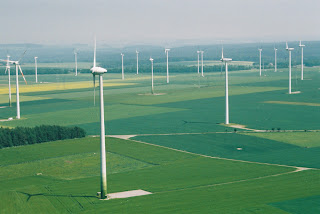 A contract for the subsidization of the third wind park in Cyprus was signed today at the Commerce and Industry Ministry in Nicosia.Rocas Aeoliki Cyprus Ltd will be able to produce 20MW of electricity at its turbine installation in the Ayia Anna area, Larnaca district.“This means we are very near our target of producing 165MW by 2013 and in good time too,” Minister Antonis Paschalides said.On behalf of the company, the Director Demetris Yiannaki said they were anxious to start production in a year’s time and pledged to keep the completion schedule.
 Cyprus Social Ecology Movement in an effort to help young Pavlos Kleovoulou, who's suffering from a very rare disease which has to be traeted abroad urgently, decided to organize an art exhibition - paintings, sculptures and handcrafts - which will be donated by the artists.
The exhibition is organized under the authority of the support team of young Pavlos and ALL raised money will be given for the treatment.
In this respect, we gratefully asking our artists friends and members of the group to donate a piece of their art.
We also call upon all our members to refer to every artist they know, asking them to donate a piece of art, in order to raise a sufficient number of art pieces and maintain the best possible results.
Exact date and place of the exhibition will be announced in a few days.
KISA has started collecting used textiles for purposes of providing them to people who need them, for fundraising and promotion of recycling.We collect:· Men´s, women´s children´s clothing and paired shoes · Household textiles i.e. curtains and linen · Handbacks· BeltsUnfortunately we cannot accept:· Dirty or wet clothing · Carpets· Mats· Off cuts of materials· Single shoes These items will be processed in collaboration with Anakyklos Perivallontiki, a non-for-profit environmentalist organisation as follows:i) The clothing will be collected at KISA premises ii) The items will be collected regularly by Anakyklos, they will be weighed and a donation per kilo will be offered to KISA, according to the quality of the items. iii) Some of the clothes, after sorting, will be offered at nominal prices (to cover the cost) or will be provided free of charge in cases of people in need.iv) Anakyklos will organise bazaars for KISA, with all proceeds offered to KISA.v) The clothes will be available to be sent to countries that face emergency situations, natural disasters etc.vi) Most of the items will be exported, aiming basically at reuse. The items that cannot be reused as second hand clothes will be recycled in order to produce wiping cloths, fibres for new clothing, insulation material and other products.
Only a small part, around 2%, will end up in landfill. It is stressed that the income from the sales of second hand items cover the costs of recycling.The net income from the project will be redirected to funding environmental actions and programmes.By offering your used clothes, shoes etc, you contribute: A) To diminishing garbage that otherwise would end up in landfill, thus economising on recourses and manpower B) Towards a cleaner, healthier environmentC) To the provision of useful items, free of charge or at low prices to people in Cyprus and abroad who need them D) To funding of KISA activities, that include the provision of support services, free of charge, to migrants, refugees etc , programmes for children and other activities.KISA - Action for Equality, Support, AntiracismP.O. Box 22113, 1517 Nicosia, Cyprus Tel : 00357 22 878181 - Fax: 00357 22 773039email: kisa@cytanet.com.cy - web: www.kisa.org.cy
 HE TOWN Planning Department has granted permission for a “huge” new church next to 500-year-old Ayia Paraskevi Church in Strovolos (Nicosia), despite objections by Strovolos Municipality and local residents.
In a press statement, the Cyprus Social Ecology Movement slammed the proposed building of a “huge luxury church in the yard of the historic church of Ayia Paraskevi in Nicosia, despite strong reaction by the public as well as officials of the state and local authority.” The group criticised the Orthodox Church leadership for its “unacceptable and continuous plans” to build huge churches in the historic centre of Nicosia, the main public park in Paphos, and now a new church “that will overwhelm the Ayia Paraskevi Church in Nicosia”.
The Archbishopric’s plan to build a vast new cathedral in Nicosia old town has provoked strong criticism in terms of its impact on the area in visual and other terms. The Archbishop’s office is said to be lobbying hard to win the approval of Nicosia municipal councillors. In July 2009, Paphos Bishop Georgios announced his plans for a 20-metre tall cathedral in Paphos, but the local council voted it down overwhelmingly earlier this week, as part of the town planning consultation process. Ayia Paraskevi is one of the oldest churches in Nicosia, built some 500 years ago, and is tucked into the corner of a sizeable plot of land next to the Central Bank building and overlooked by the large head offices of the Bank of Cyprus. A photo of is featured in the European Commission’s online photo archive for Cyprus, designed to illustrate the cultural aspect of EU enlargement.
Town Planning Dept Head Christos Ktorides told the Mail yesterday that “an application for planning permission was made some time ago, and I believe it was granted recently.” Ktorides confirmed that the intention is to build a large new church next to the existing 500-year-old building, and “a consultation was carried out regarding the environmental impact on the immediate surroundings and area.” He firmly denied the suggestion that the new structure will tower over the old church, saying that there will be “a fair distance” between them. “Care was taken to maintain sufficient space around the old church and ensure it is not dominated by the new structure.
There will be a courtyard around the existing church – in no way will it be affected”, he said. Ktorides added: “The 12-floor apartment blocks across the road and the Central Bank building right next to it pose more questions in terms of size and dominance of the surroundings.” Strovolos Municipality Mayor Savvas Iliofotou explained to the Mail that two permits are needed for the new church to be built: planning permission, granted by the Town Planning Department, and a building permit, issued by the local authority. “When we were consulted by the Town Planning Dept as part of the normal process after they received the planning application from the Church, our response was negative”, Iliofotou said. He added: “According to what I have heard – we have not yet seen anything in writing – the Town Planning Dept has granted planning permission for the new church.
So now, we are obliged to issue a building permit, as the law says that once planning permission has been granted, we no longer have the right to withhold building permission except in cases of blatant violation of planning regulations.” In terms of when work on the new church might actually start, Iliofotou said that it normally takes “a minimum of three months” for a building permit to be issued once the application has been made officially.
(By Charles Charalambous - Cyprus Mail)
 WWF has launched a new voluntary rating tool for paper companies to report on their global ecological footprint.
The Paper Company Environmental Index assesses key environmental criteria, such as use of recycled fibre or fibre coming from well-managed forests, energy use and CO2 emissions, water consumption and water pollution.
Five globally significant fine paper manufacturers — Domtar from North America, M-real, Stora Enso and UPM from Europe and Mondi Group from South Africa/Europe — have been the first to voluntarily disclose their environmental profiles on WWF´s new online Paper Company Index. Results and profiles can be found www.panda.org/PaperCompanyIndex.
“WWF applauds these companies for their leadership and transparency,” says Harri Karjalainen, WWF’s Pulp and Paper Programme Manager. “They are the vanguard of a more sustainable paper industry.”
“Other fine paper and tissue companies, particularly those in North and South America and Asia, are invited to follow suit and show their boards of directors, business partners, shareholders, investors, paper buyers and communities what they have done to reduce their global ecological footprint,” says Karjalainen. “We hope this new online tool can promote some healthy competition within the paper industry. Who can achieve the lightest footprint?”
One of the participating companies, Mondi Group CEO, David Hathorn says: "We are pleased to have been part of the inaugural WWF Paper Company Environmental Index which assessed the efficient use of resources and environmental care. We hope that the index will attract many global paper companies as it provides an opportunity for participating companies to present progress made with reducing their environmental footprint.”
Fine papers have everyday uses including copier/printer paper, book paper, envelopes, forms, writing pads, high-quality magazines and brochures, catalogues and annual reports. WWF has launched the Paper Company Environmental Index at a time when total paper consumption is expected to increase from today’s 400 million tons to 450-500 million tons by 20201 leaving an unacceptably large ecological footprint on the planet if the industry does not make significant improvements. Irresponsible pulpwood harvesting and expanding pulpwood plantations have the potential to threaten fragile ecosystems and create social concerns if not carried out responsibly.
The pulp and paper industry is among the world’s largest users of energy and emitters of greenhouse gases, and a significant source of water pollution and landfill waste. The Paper Company Environmental Index covers impacts on forest ecosystems from fibre sourcing (35% of the maximum 100 points), emissions from manufacturing process such as water pollution and greenhouse gas emissions (35%), and corporate transparency (30%). The criteria apply to both policy and production, thus measuring each company´s targets and actual performance.
The index also includes companies’ own operations as well as the supply chain; for example, market pulp bought for production of the end product. The pulp and paper industry’s expansion is driven largely by emerging economies, in particular in Asia. Many global pulp and paper companies are moving their production to the Southern Hemisphere due to lower production costs. Pulpwood from the South is travelling longer distances to North American and European paper mills; approximately 80% of market pulp crosses an international border and 40% crosses an ocean to reach its market.
 Cyprus Social Ecology Movement organizes a campaign to assist people using a “disable’s car" and are facing serious problems with parking places.
As per the standing law, the local authorities have the obligation to set certain parking places, where, the disable person can park their vehicles near their working and resident locations.
In this respect, we call upon all citizens, who happen to know people facing such problems, to send us all necessary information (name, address etc.) in order to address relevant requests to various Municipal Authorities. You can send all information, either with an email, to gr.greens@gmail.com, or by fax to 22 519400 or give us a call at 99 653634
Cyprus Social Ecology Movement
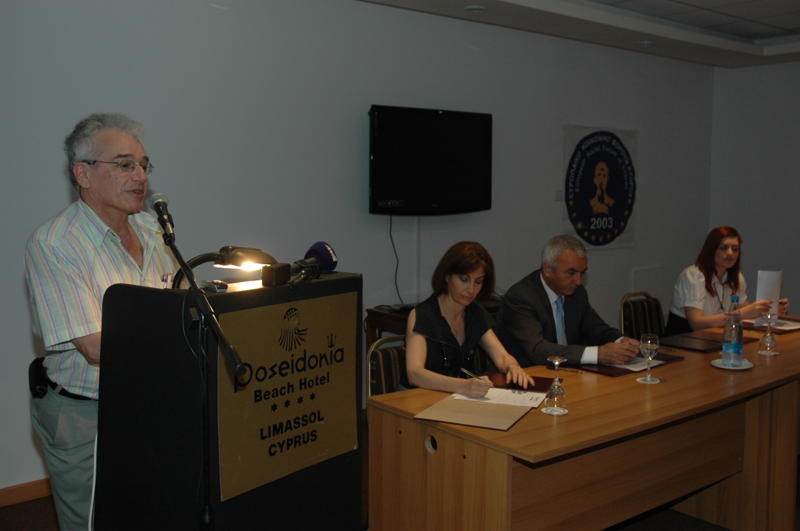
 The first open meeting on the subject of “Accessible Tourism” arranged by the Cyprus Committee of Accessible Tourism was held on 3rd June 2010 at Hotel Posidonias, with the participation of the Minister of Trade and Industry, the Cyprus Tourist Organisation and representatives of Municipalities and NGO networks.
ENAT Member, the European Social Forum of Cyprus has taken the initiative to form the Cyprus Committee of Accessible Tourism and was successful in bringing together the major players for this inaugural meeting. The meeting was honoured to welcome the Minister of Trade and Industry, Mr. Antonis Paschalidis, as well as the Municipal Advisers of the Municipality of Yermasoyia, Mrs. Pepy Orphanidou, and the Municipality of Mesa Yitonia, Mr Stelios Stylianos.
The Chairman of the Cyprus Tourist Organisation, Mr. Alekos Orountiotis also attended the meeting. With his positive statements and political will, Minister Paschalidis expressed his support for policy developments that aim to promote the essential material and technical infrastructure for accessibility in all Cypriot hotels and tourism facilities, giving the delegates a sweet flavor of optimism for the future.
Mrs. Orphanidou reported on the decisions already taken by Yermasoyia Municipality to transform the municipality into the first Accessible Municipality of Limassol, and the 14 policy steps that follow the direction of TOURISM FOR ALL. She also expressed the decision of her Municipality to apply the law strictly, regarding the awarding or renewal of operating permits, ensuring that accessibility requirements are upheld.
The coordinator of the Committee Mr Chrysis Michailidis, spoke on accessibility as a Human Right and a characteristic of Culture, noting the gap between the Law and its application. The Cyprus Committee of Accessible Tourism wishes to thank the Honourable Minister Mr. Antonis Paschalidis for his support to the committee and the Hotel “Posidonias” that provided the meeting venue.