 THE PUBLIC Company for Natural Gas (DEFA) will be evaluating, over the next few weeks, the proposals submitted by four, big international companies for the supply of liquefied natural gas to Cyprus over a 20-year period. A new round of negotiations with at least two of the short-listed companies would follow as DEFA, which is owned by the state and the Electricity Authority of Cyprus (EAC), are looking to secure the best possible terms.
Once the contract is signed, the EAC would announce its decision regarding its strategic partner for the construction and operation of the land terminal for the LNG. After more than a decade of prevarication and indecision, the authorities have finally got moving. The government found a sense of urgency once the EU started imposing fines on Cyprus for its CO2 emissions, a cost that will increase every year and will be passed on to the Electricity Authority’s customers.
But as with all rushed decisions there is a big risk of costly mistakes being made. Serious reservations have already been expressed about the government’s plans which, on the surface, do not seem to be the most cost-effective. This is inevitable given that the enterprise was placed on the wrong basis from the start, by the approval in 2007 of the law that gave DEFA monopolistic rights and obliged it to purchase LNG and de-liquify it at the Vassiliko terminal. The most worrying thing is that the state would be in charge of the project, which means costs would be higher than if it were given to the private sector. In a statement issued on Monday, DISY deputy leader Averof Neophytou questioned the logic of awarding the successful company a 20-year, supply contract. What if, in five or ten years, Cyprus was able to extract natural gas from sea? Explorations are currently under way and this possibility is not as remote as it seemed three years ago. But even if we don’t find natural gas under the sea, in ten years’ time there could be cheaper alternatives to LNG, such as compressed natural gas (CNG).
Former commerce minister Antonis Michaelides expressed a similar opinion, warning that the LNG/land terminal option could be disastrous for the economy. The cost of the investment in a land terminal would be huge and it would limit our options to LNG which might not be the cheapest alternative. He repeated his view - first voiced three years ago – that Cyprus should have invited tenders from abroad requesting the supply of natural gas directly to EAC’s power stations. A time-frame would have been demanded and guarantees for the continuous supply from the successful company.
We may have had to pay a slightly higher unit price, but there would be no need for a big investment in a land terminal and exclusive reliance on LNG. This would have been the rational approach that would have led to the most competitive and cost-effective solution. But it seems such rationality is beyond our politicians who could lumber the taxpayer with huge and unnecessary costs.
(Cyprus Mail)
Between 3 and 8 August, ENORASIS socio-cultural club will be on nature holidays at Polis Chrysochous Eucalyptus Camping Site. Come any day you feel comfortable. We will try to help those who would ask for relevant equipment. Call us for any information (Gaston 99.568.223).
 Municipality has installed four new defibrillators around the city and a portable one, all of which will be used only by trained staff as part of an effort to save lives when access to a hospital may not be immediate.
The defibrillators have been installed at the Town Hall, the municipality’s Technical Services Offices, the Municipal Swimming Pool and the old Municipal Market. Also every Wednesday, during the operational hours of the market near the ‘Oxi’ roundabout, there would be somebody with a portable defibrillator patrolling the area to cover any possible problems that occur. Nicosia Mayor Eleni Mavrou said that only trained personnel would be allowed to use the medical equipment to ensure there was no misuse. “This is the first series in this programme and it is expected that after the summer more defibrillators will be installed in highly concentrated areas,” she said.
To undertake the operation of the defibrillators, 17 people have been trained by cardiologist and pathologist Dr. Piero Georgiou and expert Marios Kaissi. Andreas Karagiorgis, a health and safety officer, explained that the employees would have to have previous experience in first aid and would therefore be able to tell the difference between cardiac arrest and a mere fainting incident. Ioannis Leontiou instructor for the European Resuscitation Council said that according to the law, the trainees will have to retake tests every year to ensure that they are up to standards. Furthermore, some of the regulations will have to be amended in order to coincide with EU standards.
Costas Antoniades, head of the accident and emergency department at the Nicosia general hospital said that the training was quite easy. “But if a person doesn’t know how to handle it, it can be really dangerous, and amongst other things, can cause heart irregularities. If the person is conscious when you do it, it’s like getting an electric shock,” he said. Cardiac arrest can happen at any time and can occur without symptoms, even to people who do not have a history of heart problems.
The municipality said an effective and instantaneous response to this “deadly and silent enemy” was defibrillation, which restores the natural rhythm of the heart. Clinical studies have shown that when victims of cardiac arrest are given immediate defibrillation, there is a 90 per cent increase in their chances of survival. Leontiou explained that the quantity and quality of training needs to be high to ensure that out of hospital incidents do not result in death.
(Cyprus Mail)
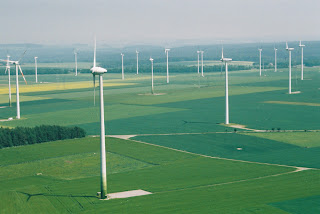 A contract for the subsidization of the third wind park in Cyprus was signed today at the Commerce and Industry Ministry in Nicosia.Rocas Aeoliki Cyprus Ltd will be able to produce 20MW of electricity at its turbine installation in the Ayia Anna area, Larnaca district.“This means we are very near our target of producing 165MW by 2013 and in good time too,” Minister Antonis Paschalides said.On behalf of the company, the Director Demetris Yiannaki said they were anxious to start production in a year’s time and pledged to keep the completion schedule.
 Cyprus Social Ecology Movement in an effort to help young Pavlos Kleovoulou, who's suffering from a very rare disease which has to be traeted abroad urgently, decided to organize an art exhibition - paintings, sculptures and handcrafts - which will be donated by the artists.
The exhibition is organized under the authority of the support team of young Pavlos and ALL raised money will be given for the treatment.
In this respect, we gratefully asking our artists friends and members of the group to donate a piece of their art.
We also call upon all our members to refer to every artist they know, asking them to donate a piece of art, in order to raise a sufficient number of art pieces and maintain the best possible results.
Exact date and place of the exhibition will be announced in a few days.
KISA has started collecting used textiles for purposes of providing them to people who need them, for fundraising and promotion of recycling.We collect:· Men´s, women´s children´s clothing and paired shoes · Household textiles i.e. curtains and linen · Handbacks· BeltsUnfortunately we cannot accept:· Dirty or wet clothing · Carpets· Mats· Off cuts of materials· Single shoes These items will be processed in collaboration with Anakyklos Perivallontiki, a non-for-profit environmentalist organisation as follows:i) The clothing will be collected at KISA premises ii) The items will be collected regularly by Anakyklos, they will be weighed and a donation per kilo will be offered to KISA, according to the quality of the items. iii) Some of the clothes, after sorting, will be offered at nominal prices (to cover the cost) or will be provided free of charge in cases of people in need.iv) Anakyklos will organise bazaars for KISA, with all proceeds offered to KISA.v) The clothes will be available to be sent to countries that face emergency situations, natural disasters etc.vi) Most of the items will be exported, aiming basically at reuse. The items that cannot be reused as second hand clothes will be recycled in order to produce wiping cloths, fibres for new clothing, insulation material and other products.
Only a small part, around 2%, will end up in landfill. It is stressed that the income from the sales of second hand items cover the costs of recycling.The net income from the project will be redirected to funding environmental actions and programmes.By offering your used clothes, shoes etc, you contribute: A) To diminishing garbage that otherwise would end up in landfill, thus economising on recourses and manpower B) Towards a cleaner, healthier environmentC) To the provision of useful items, free of charge or at low prices to people in Cyprus and abroad who need them D) To funding of KISA activities, that include the provision of support services, free of charge, to migrants, refugees etc , programmes for children and other activities.KISA - Action for Equality, Support, AntiracismP.O. Box 22113, 1517 Nicosia, Cyprus Tel : 00357 22 878181 - Fax: 00357 22 773039email: kisa@cytanet.com.cy - web: www.kisa.org.cy
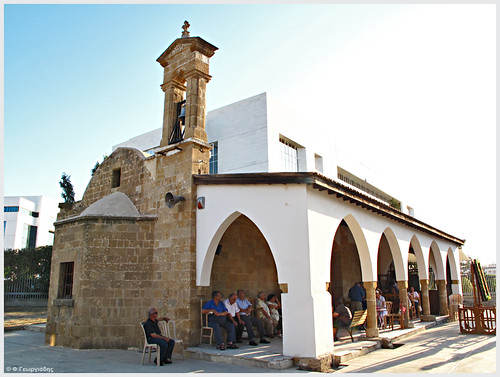 HE TOWN Planning Department has granted permission for a “huge” new church next to 500-year-old Ayia Paraskevi Church in Strovolos (Nicosia), despite objections by Strovolos Municipality and local residents.
In a press statement, the Cyprus Social Ecology Movement slammed the proposed building of a “huge luxury church in the yard of the historic church of Ayia Paraskevi in Nicosia, despite strong reaction by the public as well as officials of the state and local authority.” The group criticised the Orthodox Church leadership for its “unacceptable and continuous plans” to build huge churches in the historic centre of Nicosia, the main public park in Paphos, and now a new church “that will overwhelm the Ayia Paraskevi Church in Nicosia”.
The Archbishopric’s plan to build a vast new cathedral in Nicosia old town has provoked strong criticism in terms of its impact on the area in visual and other terms. The Archbishop’s office is said to be lobbying hard to win the approval of Nicosia municipal councillors. In July 2009, Paphos Bishop Georgios announced his plans for a 20-metre tall cathedral in Paphos, but the local council voted it down overwhelmingly earlier this week, as part of the town planning consultation process. Ayia Paraskevi is one of the oldest churches in Nicosia, built some 500 years ago, and is tucked into the corner of a sizeable plot of land next to the Central Bank building and overlooked by the large head offices of the Bank of Cyprus. A photo of is featured in the European Commission’s online photo archive for Cyprus, designed to illustrate the cultural aspect of EU enlargement.
Town Planning Dept Head Christos Ktorides told the Mail yesterday that “an application for planning permission was made some time ago, and I believe it was granted recently.” Ktorides confirmed that the intention is to build a large new church next to the existing 500-year-old building, and “a consultation was carried out regarding the environmental impact on the immediate surroundings and area.” He firmly denied the suggestion that the new structure will tower over the old church, saying that there will be “a fair distance” between them. “Care was taken to maintain sufficient space around the old church and ensure it is not dominated by the new structure.
There will be a courtyard around the existing church – in no way will it be affected”, he said. Ktorides added: “The 12-floor apartment blocks across the road and the Central Bank building right next to it pose more questions in terms of size and dominance of the surroundings.” Strovolos Municipality Mayor Savvas Iliofotou explained to the Mail that two permits are needed for the new church to be built: planning permission, granted by the Town Planning Department, and a building permit, issued by the local authority. “When we were consulted by the Town Planning Dept as part of the normal process after they received the planning application from the Church, our response was negative”, Iliofotou said. He added: “According to what I have heard – we have not yet seen anything in writing – the Town Planning Dept has granted planning permission for the new church.
So now, we are obliged to issue a building permit, as the law says that once planning permission has been granted, we no longer have the right to withhold building permission except in cases of blatant violation of planning regulations.” In terms of when work on the new church might actually start, Iliofotou said that it normally takes “a minimum of three months” for a building permit to be issued once the application has been made officially.
(By Charles Charalambous - Cyprus Mail)
 WWF has launched a new voluntary rating tool for paper companies to report on their global ecological footprint.
The Paper Company Environmental Index assesses key environmental criteria, such as use of recycled fibre or fibre coming from well-managed forests, energy use and CO2 emissions, water consumption and water pollution.
Five globally significant fine paper manufacturers — Domtar from North America, M-real, Stora Enso and UPM from Europe and Mondi Group from South Africa/Europe — have been the first to voluntarily disclose their environmental profiles on WWF´s new online Paper Company Index. Results and profiles can be found www.panda.org/PaperCompanyIndex.
“WWF applauds these companies for their leadership and transparency,” says Harri Karjalainen, WWF’s Pulp and Paper Programme Manager. “They are the vanguard of a more sustainable paper industry.”
“Other fine paper and tissue companies, particularly those in North and South America and Asia, are invited to follow suit and show their boards of directors, business partners, shareholders, investors, paper buyers and communities what they have done to reduce their global ecological footprint,” says Karjalainen. “We hope this new online tool can promote some healthy competition within the paper industry. Who can achieve the lightest footprint?”
One of the participating companies, Mondi Group CEO, David Hathorn says: "We are pleased to have been part of the inaugural WWF Paper Company Environmental Index which assessed the efficient use of resources and environmental care. We hope that the index will attract many global paper companies as it provides an opportunity for participating companies to present progress made with reducing their environmental footprint.”
Fine papers have everyday uses including copier/printer paper, book paper, envelopes, forms, writing pads, high-quality magazines and brochures, catalogues and annual reports. WWF has launched the Paper Company Environmental Index at a time when total paper consumption is expected to increase from today’s 400 million tons to 450-500 million tons by 20201 leaving an unacceptably large ecological footprint on the planet if the industry does not make significant improvements. Irresponsible pulpwood harvesting and expanding pulpwood plantations have the potential to threaten fragile ecosystems and create social concerns if not carried out responsibly.
The pulp and paper industry is among the world’s largest users of energy and emitters of greenhouse gases, and a significant source of water pollution and landfill waste. The Paper Company Environmental Index covers impacts on forest ecosystems from fibre sourcing (35% of the maximum 100 points), emissions from manufacturing process such as water pollution and greenhouse gas emissions (35%), and corporate transparency (30%). The criteria apply to both policy and production, thus measuring each company´s targets and actual performance.
The index also includes companies’ own operations as well as the supply chain; for example, market pulp bought for production of the end product. The pulp and paper industry’s expansion is driven largely by emerging economies, in particular in Asia. Many global pulp and paper companies are moving their production to the Southern Hemisphere due to lower production costs. Pulpwood from the South is travelling longer distances to North American and European paper mills; approximately 80% of market pulp crosses an international border and 40% crosses an ocean to reach its market.
 Cyprus Social Ecology Movement organizes a campaign to assist people using a “disable’s car" and are facing serious problems with parking places.
As per the standing law, the local authorities have the obligation to set certain parking places, where, the disable person can park their vehicles near their working and resident locations.
In this respect, we call upon all citizens, who happen to know people facing such problems, to send us all necessary information (name, address etc.) in order to address relevant requests to various Municipal Authorities. You can send all information, either with an email, to gr.greens@gmail.com, or by fax to 22 519400 or give us a call at 99 653634
Cyprus Social Ecology Movement
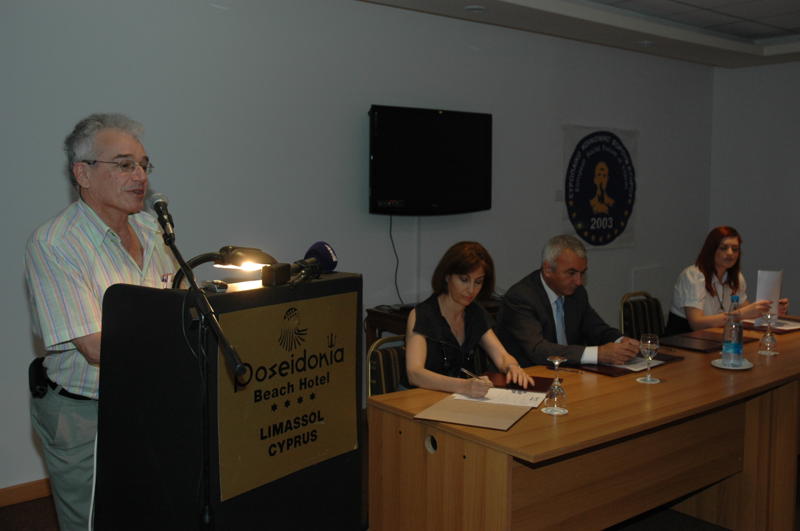 The first open meeting on the subject of “Accessible Tourism” arranged by the Cyprus Committee of Accessible Tourism was held on 3rd June 2010 at Hotel Posidonias, with the participation of the Minister of Trade and Industry, the Cyprus Tourist Organisation and representatives of Municipalities and NGO networks.
ENAT Member, the European Social Forum of Cyprus has taken the initiative to form the Cyprus Committee of Accessible Tourism and was successful in bringing together the major players for this inaugural meeting. The meeting was honoured to welcome the Minister of Trade and Industry, Mr. Antonis Paschalidis, as well as the Municipal Advisers of the Municipality of Yermasoyia, Mrs. Pepy Orphanidou, and the Municipality of Mesa Yitonia, Mr Stelios Stylianos.
The Chairman of the Cyprus Tourist Organisation, Mr. Alekos Orountiotis also attended the meeting. With his positive statements and political will, Minister Paschalidis expressed his support for policy developments that aim to promote the essential material and technical infrastructure for accessibility in all Cypriot hotels and tourism facilities, giving the delegates a sweet flavor of optimism for the future.
Mrs. Orphanidou reported on the decisions already taken by Yermasoyia Municipality to transform the municipality into the first Accessible Municipality of Limassol, and the 14 policy steps that follow the direction of TOURISM FOR ALL. She also expressed the decision of her Municipality to apply the law strictly, regarding the awarding or renewal of operating permits, ensuring that accessibility requirements are upheld.
The coordinator of the Committee Mr Chrysis Michailidis, spoke on accessibility as a Human Right and a characteristic of Culture, noting the gap between the Law and its application. The Cyprus Committee of Accessible Tourism wishes to thank the Honourable Minister Mr. Antonis Paschalidis for his support to the committee and the Hotel “Posidonias” that provided the meeting venue.
 How do Cypriots measure up? An example is how plastic bags in supermarkets, kiosks, shops and bakeries are handled.
There are several “distinctions”, all of which don’t live up to those in the international context, whether we aspire to be European or part of the wider international society. In many countries, plastic bags need to be purchased, in others they are banned. India, for example initiated a law in 2005 where manufacturers and stores selling plastic bags will be fined Rs 5,000, while individuals using bags face penalties of Rs 1,000.
Here, we are still at the stage where at best, paper or canvas bags are offered for sale, and at worst people are forced to accept plastic bags. Starting with shops, the best we can hope for is that an international company gives out paper bags. At worst, you are told that you may not leave the shop without a plastic bag for security reasons.
And how do all these other countries do without those? Regarding supermarkets, a remarkable (?) change has happened. Two big chains actually sell canvas bags instead of selling the plastic bags so is this progress? One advertises an environmental awareness. But does it happen? Purchasing fruits, I have yet to see a place where those can be gathered in anything else than plastic bags.
When we, as customers, arrive at the cashiers, who are ultimately the ones who decide on what to do with our purchases, the final verdict is and has been that you have to inform them that you come equipped with a canvas bag. I have, in such incidences, endured many comments which ensured that I felt bad after any shopping experience, such as: “Are you sure you can carry this?” Yes, well, I have bought groceries for 40 years or so, so why wouldn’t I know? In addition, a known bakery chain insists that customers need to use plastic bags.
I recently went to a store where the cashier actually giggled at my request to carry out one item without taking any bags. Summarisng these reactions, it is not surprising that the younger generation resists the idea of taking a canvas bag or refuse a plastic bag.
Until recently, it was considered to be “gay” by my sons to do so. Where is the progress? There are less negative comments and pitying looks. Good enough? We have a long way to go and not much time to get there.
Annette Chrysostomou
 Water is a very valuable commodity in Cyprus. The yearly rainfall on the island is not generally adequate. Throughout the history islanders relied on underground water reserves to survive the year.
During the British collonial rule an extensive and complex network of wells were built to use the underground water resources. The British also introduced strict laws about water usage during dry summer months. However, the corrupt Turkish Cypriot leadership in north Cyprus and the political situation in Cyprus which does not allow adequate partnership and collaboration on water resources let to the salination of underground water resources.
This is now a very serious problem and many households receive domestic water which is practically unusable. This water is not very suitable for farming either. Unplanned and corrupt management of existing wells and new, deep wells using newer technologies dried up the underground reserves. This led to the invasion of the water-beds by the sea-water because of the pressure difference. When the sea water intrudes in an underground reservoir cleaning it up necessitates several years. To tackle the water-problems many schemes were developed.
However, the Turkish Cypriot leadership which is controlled by Republic of Turkey governments is a slave of their will and their funds. This meant that already corrupt Turkish bureaucracy made the decisions on these schemes. For example, many dams were built but the corrupt construction companies either wasted the funds or simply did not finish the job. Right now, many of these dams are serving as breeding grounds for migratory birds and picnic areas for Cypriots.
Eighteen dams were built up to now but only one serves for agriculture however others merely contain water till drying out and the water in them become salty. Denser water accumulate calcium and other materials down on the base and pollute land, close all orifices which cause feeding aquifer.
Then new water flowing into dams mixes with a highly condensed salty water that makes dams useless for any purpose. Turkish governments have also been promising impractical solutions such as bringing water from Turkey in large balloons pulled by ships or a pipeline under the Mediterranean sea. These are done mainly to serve the nationalist rhetoric of independent, self-reliant TRNC which survives thanks to "motherland" Turkey and suffers under Greek embargoes. Nowadays bringing water by balloons are proved to be impossible and project was dropped. Turkish authorities still talk about transferring water by ships however pipeline project was tendered to a company.
The failure of baloons has shown the uselessness of bringing expensive water but the show continues. Furthermore, the animosity between Turkish Cypriot and Greek Cypriot leaderships did not allow joint programs to develop to tackle this problem. In an island as small as Cyprus and with a mixed infrastructure -- which was built before the partition, it is impossible to handle the water-resources without joint programs. This is not only an environmental problem but also a very humanitarian problem.
There are many sources of funding and various methods that have been successfully employed in the region. These should have been an utmost priority for the leaderhips to implement in Cyprus, however, they could not see beyond their nationalist, self-serving rhetoric and interests.
(CAN)


