Tuesday, 9 August 2011
Temperatures to soar
Cyprus Social Ecology Movement reiterated the need to protect workers from direct sunlight and called for the revision of legislation.
“The high temperatures in combination with increased humidity over the last few days in Cyprus, brings back the serious issue of the ‘wretched conditions’ of workers in the outdoors in the insufferable heat and temperatures totally unsuitable for the human body,” the movement said.
The CSEM said the law did not include workers exposed to direct sunlight. It said the lack of legislation was a serious deficit which left workers exposed to danger and even jeopardised their lives. It also went on to accuse employers of indifference when it came to offering adequate protection to their employees who were forced to work under heatwave conditions and very high temperatures.
Saturday, 5 March 2011
Thousands of Turkish Cypriots say ‘no’ to Ankara austerity
CLOSE TO 30,000 Turkish Cypriots rallied in the northern part of Nicosia yesterday calling for the Turkish government in Ankara to withdraw an economic austerity package that they say will force the community to emigrate.
“This country is ours. We will govern ourselves!” read banners carried by throngs of protesters yesterday at what was undoubtedly the largest rally staged by the community since those in support of a UN-backed plan to reunite the island in 2004.
Discontent has been growing in the north since Ankara forced the ruling National Unity Party (UBP) to implement from January 1 sweeping austerity measures aimed at cutting back on what it sees as the north’s bloated public sector. Some salaries in the sector have been cut by up to 40 per cent, and there are plans to privatize some of the north’s ‘state–run’ corporations – a move unions believe will lead to mass redundancies.
Although primarily aimed at the Turkish government, many used yesterday’s protest to express support for the reunification of the island.
“We want the world to hear that we want peace and reunification. We want a future,” said 40 year-old Ayse Oz.
Others expressed a simple desire for self-determination - something many said even Ankara, the breakaway state’s benefactor, had refused to grant the community.
“We want to rule ourselves. Right now we don’t have sovereignty, but this is our country; we have to be the ones to run it,” 64 year-old retired Salih Pilli told the Cyprus Mail.
A similar rally on January 28 gathered over 10,000 protesters and provoked the anger of Turkish Prime Minister Tayyip Erdogan who, after seeing banners calling on Ankara to “leave the Turkish Cypriots alone”, blasted the community for being recipients Turkish financial aid while simultaneously telling Ankara to get out of its affairs. Erdogan raised tension in February by replacing his ‘ambassador’ to Nicosia with Halil Ibrahim Akca, the chief architect of the austerity package.
Clearly angered by what they saw as Erdogan’s “insults” to the community, many of yesterday’s rallygoers again carried banners calling on his Justice and Development Party (AKP) to “get your hands off the Turkish Cypriots” – a move that can be expected to further irritate the Turkish leader.
Speaking to the rally, head of the Turkish Cypriot Teachers’ Union (KTOS) Sener Elcil called for Turkey to end its policy of running the north from Ankara, and issued an appeal to Greek Cypriots and the EU to help end the division of the island.
“We will put pressure Turkey. We will put pressure on The Greek Cypriots. And we will put pressure on the EU. Turkish Cypriots will be the power behind reunification,” he said.
But with the participation also of right-wing parties in yesterday’s rally, not all calls were for reunification. Some, like Democrat Party (DP) leader Serdar Denktash, son of the founder of the ‘TRNC’ Rauf Denktash told the Mail earlier that he would join the rally because he wanted Turkey to “respect the administration” in the north as a “truly sovereign authority”.
“We are saying that we can rule ourselves. This is our house. Okay, it’s not a clean house, but we can clean it up,” he said. For the past two weeks Denktash has been staging a vigil outside the Turkish ‘embassy’ in north Nicosia
With people of all ages in attendance, yesterday’s rally passed off peacefully with police exercising their power to confiscate banners they saw as provocative or insulting to Turkey. Owner of the outspoken daily Afrika Sener Levent and a number of supporters were turned back from the rally when they tried to enter Inonu Square, the rally’s destination, carrying a banner reading, “You saved us? Hassiktir! (a mild curse in Cypriot parlance but highly insulting in Turkish)” Others carrying the Cyprus Republic flag were also presented from entering the square, and a brief scuffle ensued but no one was hurt. Levent responded by displaying the flags and banners from his office’s balcony in north Nicosia.
Commenting on the rally, head of the Eastern Mediterranean University’s (EMU) Cyprus Policy Centre Ahmet Sozen told the Cyprus Mail the protest stemmed from an almost universal desire among Turkish Cypriots for self-determination.
“This is not the same as saying they want their own state, but they want to rule themselves, either in a federation with the Greek Cypriots, or if that isn’t going to come in the near future, without the interference of Ankara, he said”.
How Turkey and the Turkish Cypriot authorities will react to yesterday’s rally remains to be seen. However the ‘finance minister’ Ersin Tatar on Tuesday warned of economic collapse if the Ankara-devised austerity package was not implemented. “If you don’t take austerity measures, and keep on borrowing, we’ll end up not being able to pay public sector salaries,” he said. He added that he wanted “to be able to create a sustainable economy so we can stand on our own feet without taking aid from Turkey”.
On the Greek Cypriot side, over 50 people gathered at the Ledra Street crossing yesterday to support and encourage Turkish Cypriots in the north, who were protesting against Ankara’s austerity measures.
The protest was organised by a Greek Cypriot and Turkish Cypriot teachers platform.
Most of the demonstrators expressed a desire to have a solution and most importantly see a reunified island soon.
“We want reunification of our country and stronger protests [to achieve this], there are too few people here today,” said 67-year-old Andreas Mandis.
“We have to mobilise to stand by our Turkish Cypriot compatriots against all the things that are keeping our country apart,” said 37-year-old Nicoletta Angelodimou.
Polis Aniftos, a 40-year-old, expressed a similar sentiment: “We want to express our support in the Turkish Cypriot struggle.”
“A solution is the only way….the situation cannot continue with the way talks are proceeding,” he added.
Friday, 11 February 2011
Protest and solidarity gathering
Saturday 12/02/2011 – 11.00 am
Our Turkish Cypriot compatriots continue with their popular protests the resistance to their current relation with Turkey and to the provocative statements by Tayip Ertogan. The atmosphere smells 2003 and reminds us the error of our side that did not embrace in practice the mobilisation then, thus leaving an opportunity to create a solution dynamic to pass away. The second chance has arrived and as history shows, we need not just verbal support but intense and clear action in society that clearly sends the message that united and in solidarity Greek Cypriots and Turkish Cypriots can coexist and live with dignity in their common country. The time to get out in the streets and send the message to all directions that with our actions, we stand by the protesters, has come and it will not wait. No more games with time. Now is the time to refuse partition. Now is the time for the solution.
Let us get into the streets
to send a strong message of solidarity
to create a common front of action
to reunite Cyprus
to not miss another chance.
Saturday, 1 January 2011
Wednesday, 1 December 2010
International Day of Persons with Disabilities
Cyprus Social Ecology Movement, on the occasion of the International Day of Persons with Disabilities, expresses its disregard for the situation and the response of the government and the Cyprus society against the problems of disable people.
Unfortunately, situations and practices of previous decades, still exist now. Disabled people are not yet fully considered within development issues. They are still excluded from society, work and social events. Even where effective disability legislation is in place, the implementation lacks ideas and is hindered by negative attitudes towards disabled people.
The annual observance of the International Day of Persons with Disabilities on 3 December, aims to promote:
- an understanding of disability issues
- the rights of persons with disabilities
- gains to be derived from the integration of persons with disabilities in every aspect of the political, social, economic and cultural life of their communities.
Thursday, 18 November 2010
Facebook video a violation of child’s rights
COMMISSIONER for Children’s Rights, Leda Koursoumba yesterday branded the video of a child waving a toy gun around and parroting his grandfather’s call to shoot Turks and communists, as a flagrant violation of the four-year-old boy’s rights.
“Any training or guidance should prepare the child for a responsible life in a free society in the spirit of understanding,” said Koursoumba.
The video was posted two weeks ago on Facebook by the boy’s grandfather, a senior official in the public service. However within minutes of the story being broadcast on CyBC on Tuesday night, the video was removed from the sight of the general public.
Those who saw it before it was removed said the video airs a man’s voice – believed to be the child’s grandfather - prompting the boy to repeat that he was going to shoot Turks and communists and ‘long-live the [Greek] junta’, which instigated the coup in Cyprus in 1974.
Koursoumba called the video a “flagrant violation” of the child’s rights, claiming that it is the state’s responsibility to intervene and protect the boy when a child’s parents and family instills racist and fascist comments. She also called for the involvement of the welfare services.
According to police spokesman Michalis Katsounotos the police chief issued orders as soon as they found out about the video, and sent the file to the Attorney-general’s office to see if criminal charges were warranted. He also highlighted that the Attorney-general might want to involve the Commissioner for the Protection of Children’s Rights and the Department of Social Services.
(Cyprus Mail)
Tuesday, 16 November 2010
Lost, found or need to be rehomed animals
Thousands of adorable pets are abandoned every year, left alone without care and food by their owners.
Christiana Mandriotou has opened a group on facebook with hundreds of pictures of abandoned animals looking for a new home.
So, we call upon your sentimental feelings. Please, if you can have a lovely pet at home, take a look at this PAGE. You will find all information needed for the pet of your choice.
Thank you in advance
Cyprus Social Ecology Movement
Tuesday, 7 September 2010
Millions of Songbirds Killed for Recipe
Parts of Europe are now "death traps" for migrating songbirds, according to the Committee Against Bird Slaughter (CABS), which reports that millions of birds are illegally poached each year -- literally. The birds are often either pickled or poached for a Cypriot "delicacy" called ambelopoulia.
Pickled songbird might not sound appetizing to everyone but, like shark fin soup, bird's nest soup and turtle dishes, it's part nutrition, part adventure and part folk remedy for those who consume it. The dish is expensive and involves illegal practices but, due to poor regulation of laws protecting songbirds, it can still be found in many restaurants.
One restaurant owner with ambelopoulia on his menu likens it to Viagra.
(Blackcap bird, commonly found in ambelopoulia; Credit: Jakub Stanco)
According to the CABS, up to 10 million songbirds are illegally killed each year, often for this dish. The poachers may prepare it themselves or, more likely, sell the birds to restaurants and others who deal in this illegal trade. A single songbird may sell for around $3.60.
In addition to outright shooting the birds, poachers will kill them in all sorts of horrific ways, as videotaped by the CABS and reported on recently by The New Yorker.
Methods include:
Struggling for hours, the birds hang and flap upside down, sometimes dying in the attempt to free themselves. Poachers later check their sticks and will kill any birds that are still alive. Images and more information about these hunting techniques are at this 10,000 Birds page.
The economic crisis in Greece and in other countries has only made matters worse. In addition to Cyprus, illegal songbird poaching is common in Malta and Italy, countries where the CABS sets up bird protection camps in the summer and autumn months, attempting to save as many birds as they can.
The illegal traps catch anything that lands on them, or flies into them, so many endangered species, such as certain owls, also become bycatch victims.
All of this comes at a time when animal welfare issues are just beginning to take root in Cyprus.
"The Cypriot government has laws readily available to be enforced that involve the welfare of animals, and dogs in particular, however, the infrastructure in dealing with issues of animal welfare is still in the very early stages," said Alexia Zalaf, a University of Leicester researcher who is hoping to improve animal welfare in Cyprus and in the United Kingdom.
She added, "Carrying out this research in Cyprus and the UK will provide much needed evidence into attitudes towards animal abuse, which is a newly established area. This research study will provide the framework for future researchers both in Cyprus and the UK to further develop the field."
"Eventually, our long term goal is to promote awareness of the phenomenon of animal abuse, and promote action not only by the general public but also by the responsible authorities," she added.
As for the illegal bushmeat trade, so often participants get involved in the illegal songbird food trade because they are hungry, have no other work, and it's fairly easy money for them. They wind up getting involved with what their friends are doing. I just hope that enforcement of hunting laws -- meant to protect endangered species -- will also be accompanied by education programs to help poachers redirect their energies into more productive, sustainable work.
Pickled songbird might not sound appetizing to everyone but, like shark fin soup, bird's nest soup and turtle dishes, it's part nutrition, part adventure and part folk remedy for those who consume it. The dish is expensive and involves illegal practices but, due to poor regulation of laws protecting songbirds, it can still be found in many restaurants.
One restaurant owner with ambelopoulia on his menu likens it to Viagra.
(Blackcap bird, commonly found in ambelopoulia; Credit: Jakub Stanco)
According to the CABS, up to 10 million songbirds are illegally killed each year, often for this dish. The poachers may prepare it themselves or, more likely, sell the birds to restaurants and others who deal in this illegal trade. A single songbird may sell for around $3.60.
In addition to outright shooting the birds, poachers will kill them in all sorts of horrific ways, as videotaped by the CABS and reported on recently by The New Yorker.
Methods include:
- playing recordings of songbird calls to lure the birds into traps
- mist nets that trap the birds mid-flight (each net costs about $120 and thousands are smuggled into Cyprus)
- use of lime-sticks
Struggling for hours, the birds hang and flap upside down, sometimes dying in the attempt to free themselves. Poachers later check their sticks and will kill any birds that are still alive. Images and more information about these hunting techniques are at this 10,000 Birds page.
The economic crisis in Greece and in other countries has only made matters worse. In addition to Cyprus, illegal songbird poaching is common in Malta and Italy, countries where the CABS sets up bird protection camps in the summer and autumn months, attempting to save as many birds as they can.
The illegal traps catch anything that lands on them, or flies into them, so many endangered species, such as certain owls, also become bycatch victims.
All of this comes at a time when animal welfare issues are just beginning to take root in Cyprus.
"The Cypriot government has laws readily available to be enforced that involve the welfare of animals, and dogs in particular, however, the infrastructure in dealing with issues of animal welfare is still in the very early stages," said Alexia Zalaf, a University of Leicester researcher who is hoping to improve animal welfare in Cyprus and in the United Kingdom.
She added, "Carrying out this research in Cyprus and the UK will provide much needed evidence into attitudes towards animal abuse, which is a newly established area. This research study will provide the framework for future researchers both in Cyprus and the UK to further develop the field."
"Eventually, our long term goal is to promote awareness of the phenomenon of animal abuse, and promote action not only by the general public but also by the responsible authorities," she added.
As for the illegal bushmeat trade, so often participants get involved in the illegal songbird food trade because they are hungry, have no other work, and it's fairly easy money for them. They wind up getting involved with what their friends are doing. I just hope that enforcement of hunting laws -- meant to protect endangered species -- will also be accompanied by education programs to help poachers redirect their energies into more productive, sustainable work.
Tokyo Two court verdict is out
Today our two anti-whaling activists stood in court as heroes, having successfully put whaling on trial, both in court, and in Japan's national media.
Junichi Sato and Toru Suzuki, known as the Tokyo Two, exposed widespread corruption in Japan's whaling programme and in return, they have been handed a 12 month jail sentence, suspended for three years.
We are appealing this totally unjust, politically motivated sentence and we need your help to do so.
Our activists are always prepared to take responsibility for their actions, and standing up in court for what we believe in is often a result of taking appropriate, peaceful action. However, it is unacceptable for the authorities to ignore human rights and freedom of expression.
Please continue to stand by Junichi and Toru: send an e-mail to Japan's Foreign Minister about this harsh verdict now.
And read more about the verdict here.
Thank you again,
Everyone,
Greenpeace International
Tuesday, 31 August 2010
Breath of fresh air since smoking ban
THERE has been a 90 per cent improvement in the quality of air in enclosed public spaces since a blanket smoking ban was introduced at the beginning of the year, a study released yesterday has found.
“The results of the study support that the smoking ban in all public places had a dramatic improvement in the quality of air in enclosed spaces and was especially effective in reducing interior pollution levels by some 90 per cent,” an announcement by Cyprus’ University of Technology (TEPAK) said.
Working in collaboration with the Harvard School of Public Health, TEPAK conducted two air quality measurements, one between April 2007 to January 2008 and again from March to May of 2010, in 21 different places of recreation around Cyprus.
Professor Gregory N Connolly of Harvard School of Public Health, who specialises in research on smoking said, “these results have surpassed all our expectations and this means that the customers and workers of the bars and restaurants in Cyprus can enjoy a safer, healthier environment as those in other countries which have already succeeded in banning smoking in all public spaces.”
The ban, which came into force on January 1 was vehemently opposed by the owners of bars and night-clubs, who argued that it would hurt their business.
In fact, in the first month, they said that their business was down by 40 per cent.
But while there was a widespread compliance at first, there have been increasing complaints that some clubs have reverted back to their old habits, allowing customers to smoke indoors.
Official police figures released yesterday show a total of 3,288 violations islandwide for the period between January and July.
Police issued on-the-spot fines for 3,230 while the other 58 cases are still to be brought before a court.
During this time police carried out 27,500 checks.
Police are authorised to issue €85 fines while violators going to court face a €2,000 fine. That includes both the owner and the smoker.
Owners of establishments also face fines of up to €1,000 for failing to place highly visible no smoking signs where applicable.
Limassol topped the charts with 1,820 violations with second-place Nicosia recording 755.
In Limassol, bars accounted for 417 of the violations, with clubs and cafes adding a further 329.
The majority in Limassol – 632 - came from an unspecified group of “other” venues.
According to the statistics, smoking is clearly a male-dominated sport, with 2,653 reported by police compared to 635 women.
The TEPAK report will come as bad news for a group of mostly DIKO and DISY deputies who are seeking to amend the smoking ban when parliament meets again after the summer recess. The deputies want designated smoking areas in hotels and larger restaurants and bars, with the owners of those premises smaller than 70 square metres having the right to decide for themselves whether to be completely smoking or non-smoking.
Wednesday, 25 August 2010
Clash at site of Ormidhia waste disposal site
TEMPERS flared at the site for Famagusta District’s new waste management plant near Ormidhia, as villagers blocked the path of earth-moving equipment that was to be used to prepare the site ahead of construction.
Large numbers of police from the Dhekelia base reportedly closed off the site yesterday morning ahead of the machinery’s arrival, prompting a large number of villagers to gather with the intention of blocking off the approach-road. After a tense stand-off, word was apparently passed to the contractor, and the machinery did not turn up. Both villagers and police left the site just before lunchtime.
The majority of Ormidhia residents have mounted a vigorous campaign of opposition to the waste disposal plant since the plans were announced some eighteen months ago, amid concerns over the risk to local residents’ health and the environment. Protest action has included blocking the Ayia Napa-Larnaca motorway. The area, which falls within SBA territory, already has an Electricity Authority power plant and a large desalinisation plant nearby.
(Cyprus Mail)
Idalion treasures

Findings of great interest were unearthed during excavations in ancient Idalion, carried out by the Lycoming College Expedition, in sites that included an extremely ancient temple, going back to the Cypro-Geometric period, which was dedicated to the Great Goddess of Cyprus, the Wanassa, or “Mistress of Animals.” According to a press release issued by the Department of Antiquities of the Ministry of Communications and Works, the seven-week-long field work focused on the terrace of the East Acropolis, Moutti tou Arvili, and the reopening of the excavations in the Adonis Temenos.
With the removal of several years of accumulated rain wash, extraordinary vessels were revealed sitting on what appeared to be the last used floor of the sanctuary. These finds indicate that the sanctuary was in use until the first century BC. The cluster of whole vessels on a floor covered with mud brick detritus may indicate that the sanctuary was abandoned in something of a hurry.
Of great interest was the discovery of the limits of the Hellenistic altar in the Adonis Temenos. As expected, the western corner of the southern edge of the altar was found approximately 8 meters west of the eastern corner. The huge size of this altar indicates the continuing importance of the cult of the consort of the Great Mother at Idalion in the Hellenistic period. Evidence of votive terracottas continued in the area of the altar.
In the area known as the “Sanctuary of the Paired Deities”, the team continued to uncover the eastern area last used in the Roman period. It was discovered that, in addition to worshipping a pair of aniconic deities, a male and a female, ancient Cypriot worshippers donated numerous limestone votive figures.
This season’s work revealed more of the Roman installations in the Eastern portion of the sanctuary, including a large cistern or basin lined with hydraulic plaster. Very near this basin is an impressive set of massive, carefully hewn paving stones set in a line, possibly to mark a ceremonial pathway. There is little doubt that this extremely ancient Temple, going back to the Cypro-Geometric period, was dedicated to the Great Goddess of Cyprus, the Wanassa, or “Mistress of Animals,” sometimes represented as Artemis, and her consort who came to be called Adonis in later centuries. That he was known as the “Master of Animals” accounts for his representation sometimes as Herakles, sometimes as Pan.
In fact, the ancient Cypriots borrowed religious symbols from many nations to represent their own native gods. New to the Lycoming College Expedition this year was the Hellenistic industrial area to the East of the Lymbia Road. As this area lies directly down-slope from the Adonis Temenos, perhaps it is not surprising that numerous sculpture fragments were found there in the upper levels. These statuettes were clearly washed down from the sacred grove above. The former American expedition in the 1970s located the large plaster-lined basin associated with the architecture in this field.
They suggested that it might be a bath complex, perhaps associated with a Roman villa or other Roman building. It seems however that the area indicates a major Hellenistic industrial installation, possibly for the processing of textiles. At each end of the basin, which measures close to 6m long by 2.7m wide, there are depressions, apparently for the insertion of wooden rods, presumably for the rolling of cloth or wool through liquid for dying or producing felt. Next year, the team plans to investigate the limits of the “Sanctuary of the Paired Deities”, to explore the Hellenistic industrial complex and to find the earlier levels of the Adonis Temenos.
Friday, 13 August 2010
Source of arsenic water discovered

GOVERNMENT scientists have at last discovered the source of arsenic contamination in Mammari villages’ water.
A committee of more than 10 scientists from the agriculture ministry’s environment service, plus one university Professor have finally established that the contamination comes from many sources, including bi-products from animal farming, light industry and the bedrock itself.
Costas Hadjipanayiotou, who led the investigation, said yesterday: “We have now completed the search, which has taken a lot of time, and all the results are now in front of the Minister, who will present the findings when he returns from his trip.” However, one source within the agriculture ministry confirmed the source of the arsenic is a combination of both natural and man-made causes. “From what I have read (the contamination) is from both farms and from rocks beneath the surface.”
The problem first emerged a year ago, when a chemical analysis of the water revealed the level of arsenic in the water exceeded internationally established safety levels. Another source, from within the committee, said: “The whole search was undertaken after the presence of arsenic was found in the water, but this was not found in all the samples.” At that time the locals initially suspected contaminants came from nearby chicken farms, which the committee source confirmed is partly true, and when the boreholes were dug to test surrounding groundwater, the microbial level was also found to be too high for drinking.
From August until October when a pipe was laid down to carry water from Nicosia, the residents were being supplied by tanker. Asked what the Ministry intended to do next, the second source said that this decision lay with the water development board (WDD) but for now the water would continue to be pumped from Nicosia. “We have not come up with a final solution yet, but for the time being water will continue to be pumped to Mammari.”
As for the microbes, the source said “since this is not now provided as drinking water, it is not a problem.” Agriculture Minister Andreas Polynikis will deliver the findings of its investigation to the Mammari community council at the end of August, when he returns from holiday.
Rush to build could prove costly

THE PUBLIC Company for Natural Gas (DEFA) will be evaluating, over the next few weeks, the proposals submitted by four, big international companies for the supply of liquefied natural gas to Cyprus over a 20-year period. A new round of negotiations with at least two of the short-listed companies would follow as DEFA, which is owned by the state and the Electricity Authority of Cyprus (EAC), are looking to secure the best possible terms.
Once the contract is signed, the EAC would announce its decision regarding its strategic partner for the construction and operation of the land terminal for the LNG. After more than a decade of prevarication and indecision, the authorities have finally got moving. The government found a sense of urgency once the EU started imposing fines on Cyprus for its CO2 emissions, a cost that will increase every year and will be passed on to the Electricity Authority’s customers.
But as with all rushed decisions there is a big risk of costly mistakes being made. Serious reservations have already been expressed about the government’s plans which, on the surface, do not seem to be the most cost-effective. This is inevitable given that the enterprise was placed on the wrong basis from the start, by the approval in 2007 of the law that gave DEFA monopolistic rights and obliged it to purchase LNG and de-liquify it at the Vassiliko terminal. The most worrying thing is that the state would be in charge of the project, which means costs would be higher than if it were given to the private sector. In a statement issued on Monday, DISY deputy leader Averof Neophytou questioned the logic of awarding the successful company a 20-year, supply contract. What if, in five or ten years, Cyprus was able to extract natural gas from sea? Explorations are currently under way and this possibility is not as remote as it seemed three years ago. But even if we don’t find natural gas under the sea, in ten years’ time there could be cheaper alternatives to LNG, such as compressed natural gas (CNG).
Former commerce minister Antonis Michaelides expressed a similar opinion, warning that the LNG/land terminal option could be disastrous for the economy. The cost of the investment in a land terminal would be huge and it would limit our options to LNG which might not be the cheapest alternative. He repeated his view - first voiced three years ago – that Cyprus should have invited tenders from abroad requesting the supply of natural gas directly to EAC’s power stations. A time-frame would have been demanded and guarantees for the continuous supply from the successful company.
We may have had to pay a slightly higher unit price, but there would be no need for a big investment in a land terminal and exclusive reliance on LNG. This would have been the rational approach that would have led to the most competitive and cost-effective solution. But it seems such rationality is beyond our politicians who could lumber the taxpayer with huge and unnecessary costs.
(Cyprus Mail)
Monday, 2 August 2010
ENORASIS Camping
Between 3 and 8 August, ENORASIS socio-cultural club will be on nature holidays at Polis Chrysochous Eucalyptus Camping Site.
Come any day you feel comfortable.
We will try to help those who would ask for relevant equipment.
Call us for any information (Gaston 99.568.223).
Come any day you feel comfortable.
We will try to help those who would ask for relevant equipment.
Call us for any information (Gaston 99.568.223).
Friday, 30 July 2010
Defibrillators installed in the center of Nicosia

Municipality has installed four new defibrillators around the city and a portable one, all of which will be used only by trained staff as part of an effort to save lives when access to a hospital may not be immediate.
The defibrillators have been installed at the Town Hall, the municipality’s Technical Services Offices, the Municipal Swimming Pool and the old Municipal Market. Also every Wednesday, during the operational hours of the market near the ‘Oxi’ roundabout, there would be somebody with a portable defibrillator patrolling the area to cover any possible problems that occur. Nicosia Mayor Eleni Mavrou said that only trained personnel would be allowed to use the medical equipment to ensure there was no misuse. “This is the first series in this programme and it is expected that after the summer more defibrillators will be installed in highly concentrated areas,” she said.
To undertake the operation of the defibrillators, 17 people have been trained by cardiologist and pathologist Dr. Piero Georgiou and expert Marios Kaissi. Andreas Karagiorgis, a health and safety officer, explained that the employees would have to have previous experience in first aid and would therefore be able to tell the difference between cardiac arrest and a mere fainting incident. Ioannis Leontiou instructor for the European Resuscitation Council said that according to the law, the trainees will have to retake tests every year to ensure that they are up to standards. Furthermore, some of the regulations will have to be amended in order to coincide with EU standards.
Costas Antoniades, head of the accident and emergency department at the Nicosia general hospital said that the training was quite easy. “But if a person doesn’t know how to handle it, it can be really dangerous, and amongst other things, can cause heart irregularities. If the person is conscious when you do it, it’s like getting an electric shock,” he said. Cardiac arrest can happen at any time and can occur without symptoms, even to people who do not have a history of heart problems.
The municipality said an effective and instantaneous response to this “deadly and silent enemy” was defibrillation, which restores the natural rhythm of the heart. Clinical studies have shown that when victims of cardiac arrest are given immediate defibrillation, there is a 90 per cent increase in their chances of survival. Leontiou explained that the quantity and quality of training needs to be high to ensure that out of hospital incidents do not result in death.
(Cyprus Mail)
Wednesday, 28 July 2010
Wind park deal
A contract for the subsidization of the third wind park in Cyprus was signed today at the Commerce and Industry Ministry in Nicosia.
Rocas Aeoliki Cyprus Ltd will be able to produce 20MW of electricity at its turbine installation in the Ayia Anna area, Larnaca district.
“This means we are very near our target of producing 165MW by 2013 and in good time too,” Minister Antonis Paschalides said.
On behalf of the company, the Director Demetris Yiannaki said they were anxious to start production in a year’s time and pledged to keep the completion schedule.
Monday, 26 July 2010
We support Pavlos Kleovoulou

Cyprus Social Ecology Movement in an effort to help young Pavlos Kleovoulou, who's suffering from a very rare disease which has to be traeted abroad urgently, decided to organize an art exhibition - paintings, sculptures and handcrafts - which will be donated by the artists.
The exhibition is organized under the authority of the support team of young Pavlos and ALL raised money will be given for the treatment.
In this respect, we gratefully asking our artists friends and members of the group to donate a piece of their art.
We also call upon all our members to refer to every artist they know, asking them to donate a piece of art, in order to raise a sufficient number of art pieces and maintain the best possible results.
Exact date and place of the exhibition will be announced in a few days.
Thursday, 22 July 2010
KISA Collects used clothes, shoes and other items
KISA has started collecting used textiles for purposes of providing them to people who need them, for fundraising and promotion of recycling.
We collect:
· Men´s, women´s children´s clothing and paired shoes
· Household textiles i.e. curtains and linen
· Handbacks
· Belts
Unfortunately we cannot accept:
· Dirty or wet clothing
· Carpets
· Mats
· Off cuts of materials
· Single shoes
These items will be processed in collaboration with Anakyklos Perivallontiki, a non-for-profit environmentalist organisation as follows:
i) The clothing will be collected at KISA premises
ii) The items will be collected regularly by Anakyklos, they will be weighed and a donation per kilo will be offered to KISA, according to the quality of the items.
iii) Some of the clothes, after sorting, will be offered at nominal prices (to cover the cost) or will be provided free of charge in cases of people in need.
iv) Anakyklos will organise bazaars for KISA, with all proceeds offered to KISA.
v) The clothes will be available to be sent to countries that face emergency situations, natural disasters etc.
vi) Most of the items will be exported, aiming basically at reuse. The items that cannot be reused as second hand clothes will be recycled in order to produce wiping cloths, fibres for new clothing, insulation material and other products.
Only a small part, around 2%, will end up in landfill. It is stressed that the income from the sales of second hand items cover the costs of recycling.
The net income from the project will be redirected to funding environmental actions and programmes.
By offering your used clothes, shoes etc, you contribute:
A) To diminishing garbage that otherwise would end up in landfill, thus economising on recourses and manpower
B) Towards a cleaner, healthier environment
C) To the provision of useful items, free of charge or at low prices to people in Cyprus and abroad who need them
D) To funding of KISA activities, that include the provision of support services, free of charge, to migrants, refugees etc , programmes for children and other activities.
KISA - Action for Equality, Support, Antiracism
P.O. Box 22113, 1517 Nicosia, Cyprus
Tel : 00357 22 878181 - Fax: 00357 22 773039
email: kisa@cytanet.com.cy - web: www.kisa.org.cy
Saturday, 17 July 2010
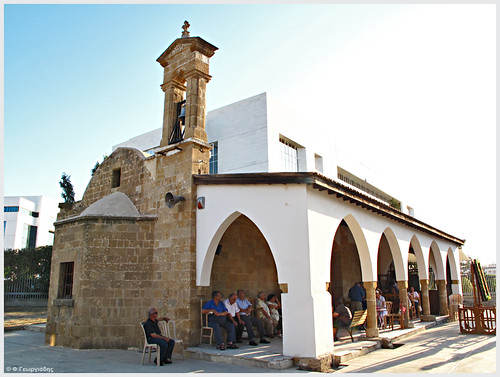
Huge church to dwarf 500-year old landmark Nicosia chapel

HE TOWN Planning Department has granted permission for a “huge” new church next to 500-year-old Ayia Paraskevi Church in Strovolos (Nicosia), despite objections by Strovolos Municipality and local residents.
In a press statement, the Cyprus Social Ecology Movement slammed the proposed building of a “huge luxury church in the yard of the historic church of Ayia Paraskevi in Nicosia, despite strong reaction by the public as well as officials of the state and local authority.” The group criticised the Orthodox Church leadership for its “unacceptable and continuous plans” to build huge churches in the historic centre of Nicosia, the main public park in Paphos, and now a new church “that will overwhelm the Ayia Paraskevi Church in Nicosia”.
The Archbishopric’s plan to build a vast new cathedral in Nicosia old town has provoked strong criticism in terms of its impact on the area in visual and other terms. The Archbishop’s office is said to be lobbying hard to win the approval of Nicosia municipal councillors. In July 2009, Paphos Bishop Georgios announced his plans for a 20-metre tall cathedral in Paphos, but the local council voted it down overwhelmingly earlier this week, as part of the town planning consultation process. Ayia Paraskevi is one of the oldest churches in Nicosia, built some 500 years ago, and is tucked into the corner of a sizeable plot of land next to the Central Bank building and overlooked by the large head offices of the Bank of Cyprus. A photo of is featured in the European Commission’s online photo archive for Cyprus, designed to illustrate the cultural aspect of EU enlargement.
Town Planning Dept Head Christos Ktorides told the Mail yesterday that “an application for planning permission was made some time ago, and I believe it was granted recently.” Ktorides confirmed that the intention is to build a large new church next to the existing 500-year-old building, and “a consultation was carried out regarding the environmental impact on the immediate surroundings and area.” He firmly denied the suggestion that the new structure will tower over the old church, saying that there will be “a fair distance” between them. “Care was taken to maintain sufficient space around the old church and ensure it is not dominated by the new structure.
There will be a courtyard around the existing church – in no way will it be affected”, he said. Ktorides added: “The 12-floor apartment blocks across the road and the Central Bank building right next to it pose more questions in terms of size and dominance of the surroundings.” Strovolos Municipality Mayor Savvas Iliofotou explained to the Mail that two permits are needed for the new church to be built: planning permission, granted by the Town Planning Department, and a building permit, issued by the local authority. “When we were consulted by the Town Planning Dept as part of the normal process after they received the planning application from the Church, our response was negative”, Iliofotou said. He added: “According to what I have heard – we have not yet seen anything in writing – the Town Planning Dept has granted planning permission for the new church.
So now, we are obliged to issue a building permit, as the law says that once planning permission has been granted, we no longer have the right to withhold building permission except in cases of blatant violation of planning regulations.” In terms of when work on the new church might actually start, Iliofotou said that it normally takes “a minimum of three months” for a building permit to be issued once the application has been made officially.
(By Charles Charalambous - Cyprus Mail)
Subscribe to:
Posts (Atom)